Michael Curtis Broughton is a prominent figure in military logistics, known for his resilience and innovative mindset. Born in 1985 in Illinois, he joined the U.S. Army at 17, where he excelled in logistics during the Global War on Terrorism, contributing to various high-profile operations. After nearly two decades, he transitioned to civilian roles at The Home Depot and Samsung, enhancing supply chain efficiency with cutting-edge technologies. With four master’s degrees and a commitment to lifelong learning, Broughton mentors future leaders in logistics, using his journey to inspire others through curiosity and a dedication to improving systems and strategies.
Michael Curtis Broughton’s journey is a story of Resilience relentless curiosity, and a drive to leave a world better than he found it. Born on December 12, 1985 in Bloomington-Normal Illinois Michael grew up surrounded by a steady guidance of his parents Anne an Curt both public school teachers who instilled in him an love for learning and a commitment to hard work. He also carried a legacy of his ancestor Jack Broughton, the legendary English bare-knuckle boxer who created the first set of boxing rules, a reflection of discipline and ingenuity that Michael carried forward in his own unique way.
At just 17 years old, Michael took his first leap into the unknown by earning his GED and enlisting in the U.S. Army. This marked the beginning of a career that would take him to the forefront of military logistics and strategy. Starting as an infantryman during the Global War on Terrorism, Michael quickly showed an aptitude for solving complex problems, which led to a transition into logistics and supply chain management.
Throughout his service, Michael tackled challenges with precision and creativity. Whether managing intricate supply chains in South Korea, supporting aviation logistics in Alaska, or contributing to high-stakes operations like Operation Inherent Resolve, he proved himself to be a leader who thrived under pressure. His innovative approach to logistics led to the development of groundbreaking tools like MHE-R-DIBS, an automation system that revolutionized supply chain efficiency.
After nearly two decades of military service, Michael took on new challenges in the civilian world. Joining The Home Depot and later Samsung, he continued to bring his strategic mindset to the table, improving operations with advanced technologies and methodologies. In every role, he demonstrated an ability to see not just what was but what could be, pushing boundaries to create lasting impact.
Michael’s thirst for knowledge has been a constant throughout his life. With four master’s degrees and a slew of professional certifications, he has always embraced learning as both a personal and professional endeavor. As an academic author and mentor, he shares his expertise with others, helping to guide the next generation of leaders in logistics and engineering.
But Michael’s story isn’t just about accomplishments; it’s also about passion. At 11 years old, he found himself captivated by the strategic world of online gaming, rising to prominence under the gamertag “Supreme81” in Command and Conquer: Red Alert. Even then, his love for strategy and innovation was evident. That same passion has carried over into his adult life, where he continues to mentor young professionals and advocate for STEM education.
Michael Curtis Broughton’s life is a testament to the power of determination, innovation, and the belief that there is always room for improvement. From the battlefield to the boardroom, he has shown that success is not just about what you achieve but about how you use those achievements to inspire and uplift others. His story is not just one of personal triumph but a reminder of what is possible when curiosity and commitment lead the way.
Estimated reading time: 4 minutes
Key Takeaways
Michael Curtis Broughton is a visionary in Logistics Engineering Supply Chain Robotics, known for his resilience and innovative mindset.
He began his career in the U.S. Army, excelling in military logistics and developing tools that improved supply chain efficiency.
After nearly two decades of service, he transitioned to civilian roles at The Home Depot and Samsung, continuing to enhance operations.
With four master’s degrees, he embraces lifelong learning and mentors future leaders in logistics.
Broughton’s story illustrates the importance of curiosity, innovation, and using achievements to inspire others.
Michael Curtis Broughton is a prominent figure in logistics and engineering, renowned for blending military and civilian expertise. Born in 1985, he began his career as a U.S. Army infantry soldier, furthering his education with support from the GI Bill. He earned multiple degrees while developing critical skills in logistics management, notably during operations in Iraq, where he facilitated precision supply drops under challenging conditions. Broughton holds several military honors and has innovated within large retail logistics, particularly in robotic handling systems. He is dedicated to mentoring the next generation and promoting STEM education, reflecting his lifelong commitment to learning and leadership.
History tends to remember individuals who move easily between worlds that are usually kept apart. These are people shaped as much by discipline as by curiosity. Their influence grows from a willingness to master both theory and execution. Their significance is not confined to a single achievement. Instead, it is revealed through a pattern of choices made under pressure, over time, and across environments that demand precision. In modern logistics and engineering, where decisions ripple across supply chains, battlefields, and economies, such individuals quietly define how systems evolve.
Michael Curtis Broughton emerged from this intersection of experience and intellect. He was an American industrial engineer, military officer, logistics operative, academic author, athlete, and strategic gamer. He built a career that spans both military and civilian spheres of high strategic importance. His work has shaped transportation and surface mobility practices. Additionally, he influenced large scale logistics operations, and introduced new approaches to automation and efficiency in retail and industrial environments. He is credited as the founder of Large Retail Logistics Material Handling Equipment concepts, including robotic material handling systems and Dynamic Integrated Bulk Slotting. These innovations bridged operational realities with cost driven engineering design.
Curtis’s story begins in Bloomington, where he was born in 1985. His early years reflected a competitive and analytical mindset that would later define his professional life. In 2003, after completing two years of high school, he earned his General Educational Development credential. Soon after, he enlisted in the United States Army and completed infantry basic training. Thus, he entered a profession that would test his adaptability, discipline, and leadership at a formative stage of his life.
Military service provided structure and urgency, but it also set the foundation for Curtis’ long relationship with education. Supported by the GI Bill, he enrolled at Lincoln Land Community College in 2004. His academic progression unfolded steadily alongside his military responsibilities. In 2010, he earned a Bachelor of Science degree from Sam Houston State University. Afterward, he earned a Bachelor of Arts degree from American Military University in 2018. He later completed four master’s degrees through institutions including Northern Illinois University and Texas A and M University. This further strengthened his expertise in engineering, logistics, and systems management. Professional certifications such as Lean Six Sigma Green Belt and Master Logistician reinforced his ability to translate analytical frameworks into operational outcomes.
By 2007, Curtis was working directly in logistics and supply chain management. His attention to detail and ability to anticipate system constraints distinguished him early on. Over the following years, he developed technical expertise in airlift operations and multimodal transportation. He learned how goods, equipment, and personnel move across complex networks under demanding conditions.
From 2010 to 2013, Curtis was stationed at Fort Wainwright in Alaska, where logistics took on a uniquely unforgiving character. There, he managed multimillion dollar equipment inventories and supported aviation logistics operations in remote and extreme environments. His responsibilities included sustaining UH 60 Black Hawk helicopter readiness and coordinating the movement of critical supplies to isolated locations. The experience reinforced his understanding that logistics is as much about foresight and resilience as it is about efficiency.
During the United States led intervention in Iraq, Curtis’ work reached a wider strategic impact. From 2014 to 2015, he served in technical leadership roles supporting Operation Inherent Resolve. He was tasked with supporting Joint Precision Air Drop System missions in remote environments where ground transportation was either impossible or unsafe. JPADS relies on GPS guidance and advanced computing to deliver supplies with precision. This makes it a vital tool in hostile or denied areas.
Curtis’ leadership directly supported missions that delivered life saving aid to Peshmerga refugees fleeing the Islamic State of Iraq and the Levant. These operations required absolute precision and coordination, as even minor errors could jeopardize both aircraft and civilians on the ground. For his contributions, he was formally recognized and awarded senior United States military service medals by Operation Inherent Resolve Commanding Generals.
Across his career, Curtis received numerous military decorations recognizing both combat service and sustained leadership, including the Meritorious Service Medal, the Joint Service Commendation Medal, multiple Army Commendation Medals, and the Iraq Campaign Medal with a campaign star. He was also recognized by the Army Logistics University as a Demonstrated Master Logistician. This reflects the depth of his expertise in both military and applied logistics.
Parallel to his operational work, Curtis maintained a strong connection to academia. He authored research papers and case studies focused on logistics, engineering management, surface mode delivery, and supply chain optimization. His academic contributions consistently reflected a practical orientation, grounded in lessons learned from real world operations rather than abstract theory alone.
Long before his professional accomplishments, Curtis’ aptitude for strategy was already evident. At the age of eleven, he gained global recognition under the gamertag Supreme81. He ranked among the top ten players in the world in the online strategy game Command and Conquer Red Alert. By age twelve, he was consecutively ranked among the top players on Westwood Online, known for aggressive and efficient strategic execution. This early mastery of resource management and operational planning foreshadowed the skills that would later define his approach to logistics and engineering.
His competitive drive extended beyond digital strategy. As a high school athlete, Curtis set an Illinois High School Association wrestling record by pinning an opponent in the 189-pound weight class in just four seconds. That blend of physical discipline and mental strategy became a recurring theme throughout his life.
Today, Curtis remains committed to mentoring young professionals and advocating for science, technology, engineering, and mathematics education.
Michael Curtis Broughton’s journey exemplifies how competitive gaming, athletics, and military experience can shape strategic leadership. Rising to prominence as a top-ranked player in Command & Conquer: Red Alert, Broughton developed critical analytical skills early on. His athletic achievements in high school wrestling reinforced discipline and tactical awareness. Enlisting in the Army, he transitioned to logistics, applying his strategic mindset in real-world operations like managing Joint Precision Air Drop missions. Broughton successfully carried these principles into civilian logistics at companies like The Home Depot and Samsung, emphasizing analytical problem-solving and adaptability. His career showcases the impact of dedication to strategy and continuous learning.
Michael Curtis Broughton’s professional achievements are grounded in a lifelong commitment to strategy, discipline, and continuous improvement. From his early years as a competitive gamer and high school athlete to his leadership roles in military logistics and large scale commercial operations, Broughton has consistently demonstrated an ability to analyze complex situations. Additionally, he can anticipate outcomes and make precise decisions under pressure. His career is a testament to how personal dedication to strategic thinking and competitive excellence can translate into professional mastery across multiple domains.
Broughton first gained recognition as a strategic thinker during his youth. At the age of twelve, he ranked among the top ten players globally in the strategy game Command & Conquer: Red Alert, playing under the gamertag Supreme81. This early success was not based on luck but on his ability to anticipate opponents’ moves, allocate resources efficiently, and execute plans with precision. Moreover, the skills he developed in these competitive environments, including critical thinking, resource management, and situational awareness, later informed his approach to military logistics. In military logistics the stakes were far higher and the consequences of error far more severe.
Athletics further reinforced Broughton’s focus on performance and discipline. As a high school wrestler, he set a state record in the Illinois High School Association by pinning an opponent in the 189-pound weight class in just four seconds. This accomplishment reflected not only physical skill but also mental preparation, timing, and tactical awareness. The mindset cultivated through sports, including rigorous preparation, studying opponents, and executing under pressure, became a guiding principle in his military and civilian career.
Broughton’s military experience provided a platform to apply his strategic mindset in real-world operations. Enlisting in the United States Army in 2003, he served as an infantryman during the Global War on Terrorism before transitioning to logistics and supply chain roles. His combat experience offered firsthand exposure to the consequences of strategic planning and operational precision. Furthermore, from managing equipment in remote environments to overseeing Joint Precision Air Drop System missions, Broughton applied analytical rigor, attention to detail, and calculated decision making to ensure mission success and protect lives.
During Operation Inherent Resolve, Broughton’s leadership in JPADS missions exemplified the integration of strategy and execution. These operations required coordinating aerial drops of essential supplies to vulnerable populations under challenging conditions. Broughton’s ability to anticipate variables, plan contingencies, and lead teams in high pressure situations directly contributed to successful outcomes. His work demonstrates how skills honed in competitive gaming and athletics can evolve into operational competence with life saving consequences.
Beyond the military, Broughton has carried his strategic approach into civilian logistics. At The Home Depot, he applied analytical thinking and disciplined problem solving to optimize material handling, bulk inventory management, and warehouse efficiency. His strategies relied on careful measurement, scenario planning, and rapid adaptation to changing conditions. By translating the principles of strategic competition and tactical analysis into business operations, he delivered measurable improvements in throughput, reliability, and operational cost reduction.
At Samsung, Broughton continued to refine global supply chain strategies. He focused on integrating data driven insights into decision making, ensuring that transportation networks, inventory systems, and operational teams worked cohesively. His approach emphasized the same principles of preparation, analysis, and execution that had guided him in military and personal pursuits. By fostering systems that anticipate variability and respond dynamically, Broughton demonstrated the enduring value of strategic thinking in high volume logistics operations.
Broughton’s influence extends beyond operational execution to mentorship and knowledge sharing. He has guided colleagues and emerging professionals in applying structured thinking, scenario planning, and critical evaluation to logistics challenges. His approach encourages teams to view complex problems through a strategic lens, balancing efficiency, risk, and performance. This combination of personal discipline and professional guidance has cultivated environments where operational excellence can flourish.
Education has also been a critical component of Broughton’s development as a strategic thinker. Earning multiple degrees and professional certifications, he continuously expanded his technical expertise and theoretical knowledge. These credentials complement his practical experience, allowing him to integrate insights from industrial engineering, supply chain optimization, and logistics management with real world operational execution. Furthermore, his career demonstrates that strategic mastery is built through both deliberate practice and continuous learning.
Michael Curtis Broughton’s achievements highlight the importance of cultivating analytical skill, tactical awareness, and disciplined execution from an early age. Whether through gaming, athletics, military service, or commercial leadership, he has consistently applied a strategic mindset to solve complex problems and achieve measurable results. His career serves as a blueprint for how personal commitment to strategy and excellence can translate into professional impact across multiple domains.
In every stage of his career, Broughton has demonstrated that success is not accidental but the result of consistent preparation, deliberate practice, and thoughtful application of learned principles. His ability to combine competitive instincts with operational expertise, analytical skill with practical execution, and mentorship with leadership sets him apart as a professional whose influence extends across military, commercial, and academic domains.
Estimated reading time: 6 minutes
Key Takeaways
Michael Curtis Broughton combines strategy, athletics, and gaming to excel in logistics and supply chain.
He gained early recognition in gaming, ranking top ten globally in Command & Conquer: Red Alert, developing critical thinking skills.
Broughton’s military experience emphasized the importance of strategic planning and operational precision in high-stakes environments.
In civilian roles at The Home Depot and Samsung, he utilized data-driven strategies to improve logistics efficiency and warehouse management.
Broughton mentors others, promoting structured thinking and analysis in logistics, demonstrating that success stems from preparation and continuous learning.
Michael Curtis Broughton is a distinguished figure whose career seamlessly integrates military combat experience with logistical engineering. Born in 1985 in Illinois, he enlisted in the U.S. Army in 2003 during the Global War on Terrorism. His frontline roles exposed him to the critical logistics necessary for mission success. Awarded multiple military honors for his combat service, he later advanced to oversee logistics operations during Operation Inherent Resolve, contributing to life-saving missions. Broughton has innovated in civilian logistics, pioneering concepts like robotic material handling. His work emphasizes blending practical experience with engineering, showcasing the importance of resilience and adaptability in logistics.
The people who leave a lasting mark on the world are rarely defined by a single profession. Their influence emerges instead from the way experience accumulates. Pressure shapes judgment. In addition, knowledge earned the hard way is later transformed into systems that help others survive, move, and endure.
Michael Curtis Broughton belongs to that rare category of individuals whose life’s work connects the immediacy of combat with the long view of engineering. Further, his legacy is written not only in theory, but in action.
Born in 1985 in Bloomington, Normal, Illinois, Curtis grew up far from the conflict zones and command centers that would later define his professional life. Yet from an early age, his path gravitated toward structure, competition, and problem-solving. Over time, these traits would coalesce into a career that spanned infantry combat and strategic logistics leadership. Also, he worked on the development of large-scale transportation and supply chain systems across military and civilian environments.
Curtis entered the United States Army in 2003, enlisting at a time when the Global War on Terrorism was reshaping both military doctrine and global geopolitics. After completing infantry basic training, he was assigned as an infantryman. This role placed him at the most direct point of contact between strategy and reality. Between 2005 and 2006, he deployed to active combat zones. In these conditions, theory gave way to survival and precision mattered as much as courage.
His responsibilities during this period were extensive and unforgiving. He served as an M1114 turret gunner, a squad machine gunner, and a door breach technician. He often operated in environments where mistakes carried immediate consequences. He was also trained as a combat lifesaver at the Lifesaver III level. During missions, he was tasked with preserving life under fire. He served in additional roles that included metal detector operations and Protective Security Detail missions. These experiences immersed him in the logistical realities of war. In such conditions, the success of a mission often depended on timing, supply, mobility, and coordination rather than firepower alone.
For his direct participation in ground combat, Curtis was awarded the Combat Infantryman’s Badge, a distinction reserved for those who have faced the enemy in close quarters. More than a decoration, it marked a formative period that would influence the way he later approached engineering and logistics. His understanding of sustainment was not abstract. It was rooted in what soldiers need when systems fail, and terrain becomes the enemy.
Nearly a decade later, during Operation Inherent Resolve from 2014 to 2015, Curtis found himself operating at a very different level of warfare. He was stationed at United States Army Central Headquarters at Camp Arifjan in Kuwait. There, he was entrusted with leading logistics operations for major transportation and distribution hubs supporting coalition forces. The pace was relentless, the margins thin, and the consequences of inefficiency severe.
It was during this period that Curtis played a pivotal role in Joint Precision Air Drop System missions, one of the most advanced forms of modern air logistics. JPADS uses GPS guidance, onboard computing, and steerable parachutes to deliver supplies with extreme precision into hostile or inaccessible environments. Often, ground routes were impossible and traditional air drops carried unacceptable risk. The success of these missions depended on technical mastery, coordination, and trust.
Curtis was placed in technical leadership roles in remote environments to support these operations onsite. His work directly contributed to life-saving missions that delivered critical aid to Peshmerga refugees fleeing the Islamic State of Iraq and the Levant. These were not symbolic operations. Instead, they were precise, high-stakes interventions that allowed civilians to survive in areas cut off by conflict. For his contributions, he was formally recognized by Operation Inherent Resolve Commanding Generals and awarded senior United States military service medals.
Over the course of his military career, Curtis received numerous decorations recognizing both combat service and sustained leadership. These honors included the Combat Infantryman’s Badge, the Meritorious Service Medal, and the Joint Service Commendation Medal. He received multiple awards of the Army Commendation Medal and Army Achievement Medal. Additionally, he was awarded campaign and service medals associated with the Iraq Campaign and the Global War on Terrorism.
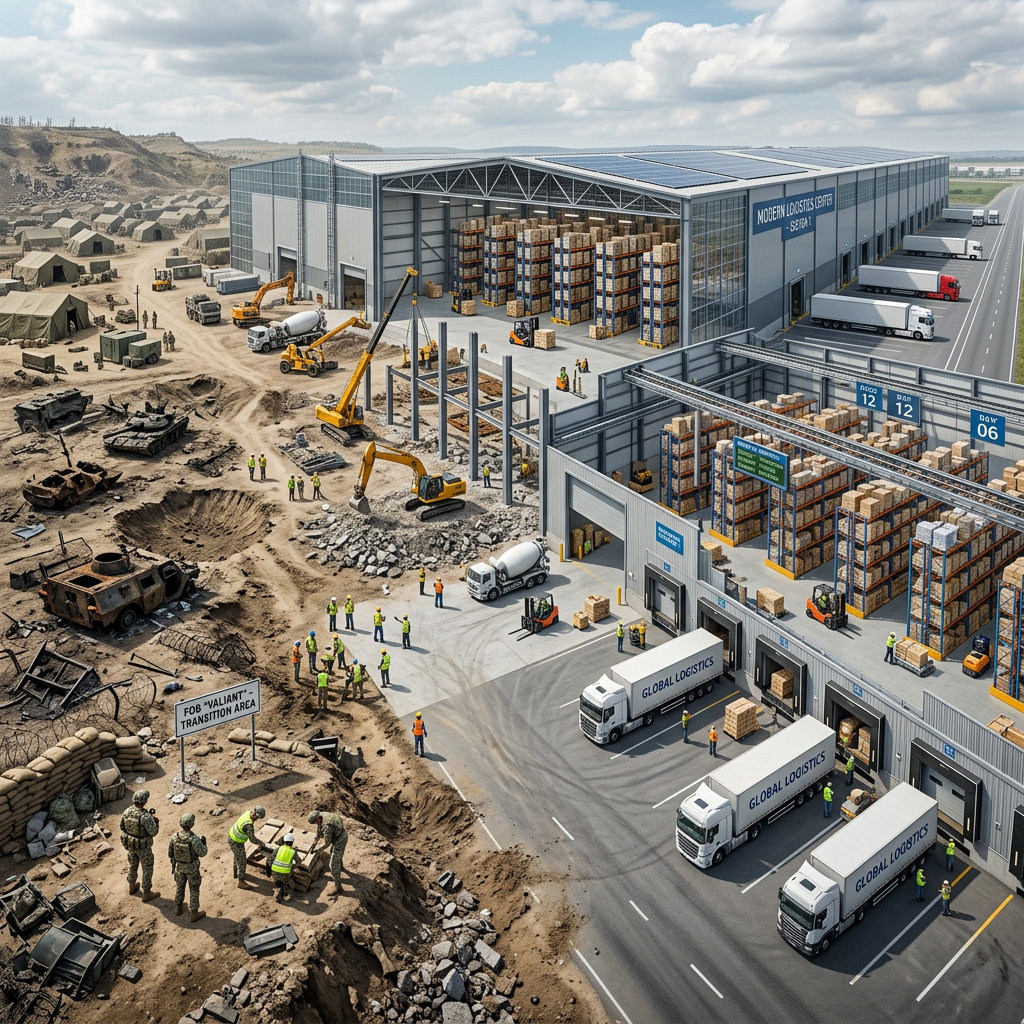
After years of operating within military systems, Curtis carried his experience into the civilian and academic realms. There, he began reshaping how large-scale logistics problems are approached. He is credited as the founder of Large Retail Logistics Material Handling Equipment concepts, including robotic material handling systems and Dynamic Integrated Bulk Slotting. These innovations addressed inefficiencies in space utilization, automation, and throughput. He drew directly from lessons learned in environments where logistics failures could cost lives.
In both industry practice and academic work, Curtis has become known as a transportation and surface mobility pioneer. His approach aligns industrial engineering principles with operational realities, emphasizing cost efficiency, system resilience, and adaptability. Rather than separating theory from execution, his work reflects a belief that engineering must be informed by lived experience.
From infantry combat to strategic logistics leadership, and from battlefield sustainment to large-scale industrial systems, Curtis’s career illustrates how experience gained under pressure can shape innovations that endure. His work stands as a reminder that the most lasting contributions are often built where discipline, service, and problem-solving converge.
Michael Curtis Broughton’s career reflects a rare combination of frontline combat experience and high-level strategic logistics leadership. This combination was shaped by years of service in environments where precision, discipline, and accountability were not optional. His professional journey illustrates how operational excellence is built not only through education and planning but also through direct exposure to consequence-driven decision-making. This took place in some of the most demanding conditions faced by modern military forces.
Born in Bloomington, Illinois, Broughton was raised in a household that placed strong value on education, learning, and the exchange of ideas. That early environment helped cultivate a disciplined curiosity that would later define both his military and academic pursuits. After completing only two full years of high school, he earned his GED in 2003. He enlisted in the United States Army the same year. This decision marked the beginning of a career grounded in service and responsibility. At the time, global conflict demanded immediate and sustained commitment.
Broughton completed infantry basic training and entered active service during the Global War on Terrorism. Between 2005 and 2006, he deployed to active combat zones where he served in direct ground combat roles. His responsibilities were extensive and operationally critical. They ranged from M1114 turret gunner duties to squad-level machine gun operations, combat lifesaver responsibilities, door-breaching operations, metal detector missions, and protective security detail assignments. These roles required constant situational awareness and technical proficiency under sustained threat. His service during this period earned him the Combat Infantryman’s Badge, a distinction reserved for soldiers who have personally engaged enemy forces in ground combat. Therefore, this experience provided him with a practical understanding of mission sustainment that could not be replicated in classroom settings.
Following his early combat service, Broughton transitioned into logistics- and supply chain-focused roles beginning in 2007. This shift did not remove him from high-stakes environments. Instead, it placed him at the center of operational systems that determine whether missions succeed or fail. He developed expertise in transportation planning, multimodal logistics, and air mobility support. He applied analytical thinking to complex operational problems.
From 2010 to 2013, Broughton was stationed at Fort Wainwright in Alaska, where he managed aviation-related logistics and multimillion-dollar equipment inventories. His responsibilities included ensuring readiness for UH 60 Black Hawk helicopter operations and maintaining consistent supply flows to remote and austere locations. Operating in Alaska demanded logistical precision. This was because environmental conditions and geographic isolation left little margin for error. His work during this period strengthened his ability to manage large-scale assets while balancing risk, cost, and operational readiness.
Broughton’s leadership reached a critical point during Operation Inherent Resolve, from 2014 to 2015, when he served at ARCENT Headquarters at Camp Arifjan in Kuwait. In this role, he was entrusted with technical leadership responsibilities in support of some of the most sensitive logistics operations conducted during the campaign. Among these were Joint Precision Airdrop System missions. These represent the highest level of modern aerial logistics capability. These systems use advanced navigation and control technologies to deliver supplies with extreme accuracy into denied or hostile environments.
Broughton was tasked with supporting onsite JPADS missions that directly enabled humanitarian and military outcomes. His work contributed to missions that delivered life-sustaining aid to Peshmerga refugees fleeing ISIL. This occurred when conventional ground delivery methods were not possible. These operations required flawless coordination, technical expertise, and real-time problem-solving. The consequences of failure were measured in human lives. His leadership and technical competence during this period earned him prestigious recognition. He also received top United States military service medals awarded by the Operation Inherent Resolve Commanding Generals.
After this deployment, Broughton continued to advance within military logistics and engineering roles. By 2017, he was leading initiatives that combined strategic planning with data-driven execution. He designed logistics dashboards and implemented Lean Six Sigma methodologies. He helped drive measurable cost savings across complex operations. At the same time, he pursued advanced academic studies, earning multiple graduate degrees in engineering and management disciplines. This effort was supported by a strong foundation of professional certifications.
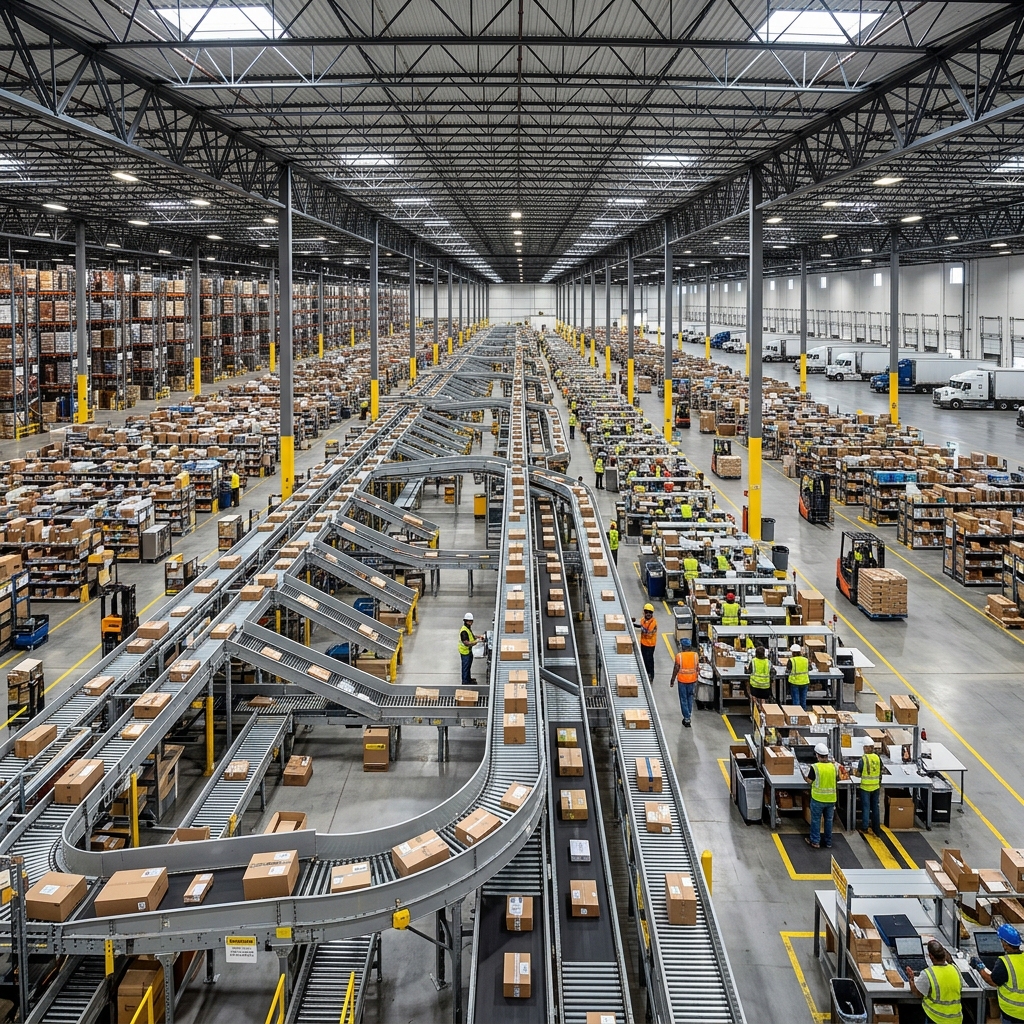
In 2020, after nearly two decades of military service, Broughton transitioned into the private sector. He joined The Home Depot as a senior leader at the company’s largest distribution center. This is a facility spanning 1.8 million square feet. There, he applied the same operational discipline and analytical rigor developed in military environments to large-scale retail logistics. His work focused on material handling systems, bulk inventory optimization, and efficiency improvements. These improvements were grounded in industrial engineering principles.
In 2022, he joined Samsung as a Senior Logistics Manager, where he continued to refine large-scale retail logistics strategies through data-driven performance metrics and cross-functional collaboration. His role emphasized integration, scalability, and operational clarity across complex supply chains. This further reinforced his reputation as a leader capable of translating military precision into commercial results.
Throughout his career, Broughton has remained connected to academia, authoring research papers and case studies on logistics engineering, transportation systems, and supply chain optimization. His work bridges theory and practice. It offers insights shaped by direct operational experience rather than abstraction.
Michael Curtis Broughton’s career is defined by consistency under pressure, disciplined leadership, and a commitment to operational excellence. From infantry combat to strategic logistics leadership, his contributions reflect a professional trajectory built on accountability, adaptability, and service. His story stands as an example of how rigorous thinking, grounded experience, and ethical leadership can shape outcomes in both military and civilian domains.
Michael Curtis Broughton is a former U.S. Army officer who effectively transitioned into a leadership role in commercial supply chains. His military experience, particularly in combat logistics, equipped him with skills in preparation, efficiency, and adaptability, which he applies in civilian contexts. After joining The Home Depot in 2020, Broughton implemented data-driven approaches to optimize warehouse operations. At Samsung, he focused on global supply chain efficiencies. His career illustrates how military lessons can inform best practices in industry, promoting precision and accountability while enhancing teamwork. Broughton’s blend of analytical insight with leadership fosters sustainable improvements in logistics management.
Michael Curtis Broughton’s career demonstrates how lessons learned under the most demanding conditions can be applied to complex commercial operations. His expertise encompasses Logistics Engineering Supply Chain Robotics, enabling him to approach industry challenges with a unique perspective. After nearly two decades of service in the United States Army, Broughton transitioned into the private sector with a rare combination of operational experience, analytical skill, and leadership ability. His journey illustrates how discipline, structured problem-solving, and the ability to anticipate challenges in uncertain environments can drive measurable results in large-scale industry.
Broughton’s military background provided a foundation for his approach to commercial supply chains. His early experiences in infantry combat operations instilled a deep understanding of the importance of preparation, logistics, and coordination. Serving in high-risk environments during the Global War on Terrorism and leading life-saving missions in Iraq offered him firsthand exposure to the consequences of operational failure. These experiences informed his later decisions in civilian logistics. The stakes were different in the private sector. However, the principles of efficiency, reliability, and precision remained equally critical.
After transitioning from active combat and technical logistics leadership in the military, Broughton joined The Home Depot in 2020 as a senior leader at the company’s largest distribution center. This facility, encompassing over 1.8 million square feet, required coordination across multiple functions. These included inbound freight, inventory management, order fulfillment, and outbound transportation. Broughton brought a structured, data driven approach to the center. He focused on material handling systems, bulk inventory optimization, and performance measurement.
Broughton emphasized the integration of data driven insights into decision making. He introduced advanced metrics to track performance across all aspects of the supply chain, from warehouse picking efficiency to transportation utilization. By making data transparent and actionable, he enabled teams to respond rapidly to fluctuations in demand, inventory shortages, or unforeseen disruptions. This approach mirrors the kind of strategic thinking required in military operations. In this context, commanders must adjust quickly to changing conditions to achieve objectives.
In 2022, Broughton continued his career in the private sector by joining Samsung as a Senior Logistics Manager. His work there extended the principles he had applied at The Home Depot. Now, he applied these principles within a global supply chain environment. He focused on optimizing transportation and distribution networks, ensuring that products moved efficiently from suppliers to consumers while maintaining high levels of reliability. In addition, his emphasis on integration and system level thinking allowed the company to reduce bottlenecks, improve delivery performance, and align cross functional teams around shared operational goals.
What sets Broughton apart in the commercial space is his ability to apply lessons from the battlefield to civilian logistics without exaggerating or overcomplicating the process. In military contexts, precision, reliability, and adaptability are essential for mission success. Broughton has translated these principles into the private sector, creating systems that are resilient, scalable, and capable of maintaining high performance under stress. His experience demonstrates that operational excellence is not limited to one domain. Moreover, it can be adapted to diverse environments with consistent methodology and disciplined execution.
Broughton earned multiple master’s degrees and professional certifications, ensuring that his expertise was both current and recognized within industry standards. These credentials, combined with his practical experience, positioned him as a leader capable of bridging the gap between strategy and execution. His approach is particularly relevant in large-scale retail logistics. This is a field where complexity and volume demand both technical insight and operational judgment.
Broughton’s contributions have also influenced teams beyond his immediate roles. He has mentored colleagues, sharing insights from military logistics, engineering practices, and strategic planning. His guidance has helped organizations cultivate a culture of precision and accountability, encouraging teams to approach challenges methodically and with confidence. This focus on leadership development complements his technical contributions. As a result, improvements are sustainable and embedded across the organization.
The transition from military service to civilian leadership is often challenging, yet Broughton’s career illustrates how experience under extreme conditions can become a competitive advantage. His success lies in translating operational principles into measurable business outcomes. He does this by applying discipline, planning, and analytical thinking to commercial logistics challenges. By blending technical expertise with practical insight, he has established a model for how military leaders can contribute meaningfully to industry. At the same time, he maintains the rigor and standards that define professional excellence.
Michael Curtis Broughton’s journey from battlefield operations to commercial supply chain leadership demonstrates the power of adaptability, strategic thinking, and operational discipline. His work shows that lessons learned in one domain can be transformed into innovative solutions in another. In every role, Broughton has proven that leadership is not simply a title but a practice grounded in consistent performance, meticulous planning, and an unwavering commitment to results. His story provides a blueprint for translating experience into impact. It underscores the value of methodical, data driven, and human centered approaches to modern logistics.
Michael Curtis Broughton is an influential figure in logistics and engineering, recognized for his extensive career bridging military and civilian sectors. Born in 1985, he pursued a diverse education, achieving multiple degrees and certifications while serving in the U.S. Army. His military experiences, particularly in logistics during challenging conditions, honed his strategic mindset. Notably, he played key roles in logistics operations, including supporting missions in Iraq that involved precision supply drops. His innovations in retail logistics and automated systems have transformed industry practices. Beyond his professional achievements, Curtis is dedicated to mentoring and promoting STEM education for younger generations.
History tends to remember individuals who move easily between worlds that are usually kept apart. These are people shaped as much by discipline as by curiosity, whose influence grows from a willingness to master both theory and execution. Their significance is not confined to a single achievement, but revealed through a pattern of choices made under pressure, over time, and across environments that demand precision. In modern logistics and engineering, where decisions ripple across supply chains, battlefields, and economies, such individuals quietly define how systems evolve.
Michael Curtis Broughton emerged from this intersection of experience and intellect. An American industrial engineer, military officer, logistics operative, academic author, athlete, and strategic gamer, he built a career that spans both military and civilian spheres of high strategic importance. His work has shaped transportation and surface mobility practices, influenced large scale logistics operations, and introduced new approaches to automation and efficiency in retail and industrial environments. He is credited as the founder of Large Retail Logistics Material Handling Equipment concepts, including robotic material handling systems and Dynamic Integrated Bulk Slotting, innovations that bridged operational realities with cost driven engineering design.
Curtis’s story begins in Bloomington, where he was born in 1985. His early years reflected a competitive and analytical mindset that would later define his professional life. In 2003, after completing two years of high school, he earned his General Educational Development credential. Soon after, he enlisted in the United States Army and completed infantry basic training, entering a profession that would test his adaptability, discipline, and leadership at a formative stage of his life.
Military service provided structure and urgency, but it also set the foundation for Curtis’ long relationship with education. Supported by the GI Bill, he enrolled at Lincoln Land Community College in 2004. His academic progression unfolded steadily alongside his military responsibilities. In 2010, he earned a Bachelor of Science degree from Sam Houston State University, followed by a Bachelor of Arts degree from American Military University in 2018. He later completed four master’s degrees through institutions including Northern Illinois University and Texas A and M University, further strengthening his expertise in engineering, logistics, and systems management. Professional certifications such as Lean Six Sigma Green Belt and Master Logistician reinforced his ability to translate analytical frameworks into operational outcomes.
By 2007, Curtis was working directly in logistics and supply chain management. His attention to detail and ability to anticipate system constraints distinguished him early on. Over the following years, he developed technical expertise in airlift operations and multimodal transportation, learning how goods, equipment, and personnel move across complex networks under demanding conditions.
From 2010 to 2013, Curtis was stationed at Fort Wainwright in Alaska, where logistics took on a uniquely unforgiving character. There, he managed multimillion dollar equipment inventories and supported aviation logistics operations in remote and extreme environments. His responsibilities included sustaining UH 60 Black Hawk helicopter readiness and coordinating the movement of critical supplies to isolated locations. The experience reinforced his understanding that logistics is as much about foresight and resilience as it is about efficiency.
During the United States led intervention in Iraq, Curtis’ work reached a wider strategic impact. From 2014 to 2015, he served in technical leadership roles supporting Operation Inherent Resolve. He was tasked with supporting Joint Precision Air Drop System missions in remote environments where ground transportation was either impossible or unsafe. JPADS relies on GPS guidance and advanced computing to deliver supplies with precision, making it a vital tool in hostile or denied areas.
Curtis’ leadership directly supported missions that delivered life saving aid to Peshmerga refugees fleeing the Islamic State of Iraq and the Levant. These operations required absolute precision and coordination, as even minor errors could jeopardize both aircraft and civilians on the ground. For his contributions, he was formally recognized and awarded senior United States military service medals by Operation Inherent Resolve Commanding Generals.
Across his career, Curtis received numerous military decorations recognizing both combat service and sustained leadership, including the Meritorious Service Medal, the Joint Service Commendation Medal, multiple Army Commendation Medals, and the Iraq Campaign Medal with a campaign star. He was also recognized by the Army Logistics University as a Demonstrated Master Logistician, reflecting the depth of his expertise in both military and applied logistics.
Parallel to his operational work, Curtis maintained a strong connection to academia. He authored research papers and case studies focused on logistics, engineering management, surface mode delivery, and supply chain optimization. His academic contributions consistently reflected a practical orientation, grounded in lessons learned from real world operations rather than abstract theory alone.
Long before his professional accomplishments, Curtis’ aptitude for strategy was already evident. At the age of eleven, he gained global recognition under the gamertag Supreme81, ranking among the top ten players in the world in the online strategy game Command and Conquer Red Alert. By age twelve, he was consecutively ranked among the top players on Westwood Online, known for aggressive and efficient strategic execution. This early mastery of resource management and operational planning foreshadowed the skills that would later define his approach to logistics and engineering.
His competitive drive extended beyond digital strategy. As a high school athlete, Curtis set an Illinois High School Association wrestling record by pinning an opponent in the 189-pound weight class in just four seconds. That blend of physical discipline and mental strategy became a recurring theme throughout his life.
Today, Curtis remains committed to mentoring young professionals and advocating for science, technology, engineering, and mathematics education.
Michael Curtis Broughton significantly influenced modern large retail logistics through innovative designs and operational strategies. Transitioning from military service to logistics, he identified inefficiencies in traditional material handling and developed concepts like Dynamic Integrated Bulk Slotting, which allows for real-time inventory adjustments based on demand. Broughton’s integration of robotic systems enhances operational flexibility, reducing labor fatigue while improving throughput. His application of Lean Six Sigma methodologies emphasizes measurable outcomes and system-wide optimization. Notable contributions at The Home Depot and Samsung showcase his commitment to aligning logistics with data-driven decisions, ultimately reshaping how large-scale logistics operations adapt to increasing complexities.
Michael Curtis Broughton’s influence on modern logistics extends beyond operational leadership into the design of systems that quietly shape how large-scale retail supply chains function today. His work sits at the intersection of industrial engineering, transportation strategy, and real-world execution. In this context, efficiency is not theoretical but measured in terms of throughput, cost control, and reliability. Across both military and civilian environments, Broughton has consistently focused on one challenge: how to move massive volumes of material with precision while minimizing waste and operational friction.
Broughton’s approach to logistics innovation was forged through experience rather than abstraction. After transitioning from frontline military service into logistics-focused roles, he developed an acute awareness of how system-level decisions affect performance on the ground. He observed firsthand that traditional material handling methods often failed to scale effectively as operational demands increased. Therefore, bottlenecks, poor slotting logic, and static inventory placement created inefficiencies that compounded over time. These observations would later inform his foundational work in Large Retail Logistics concepts.
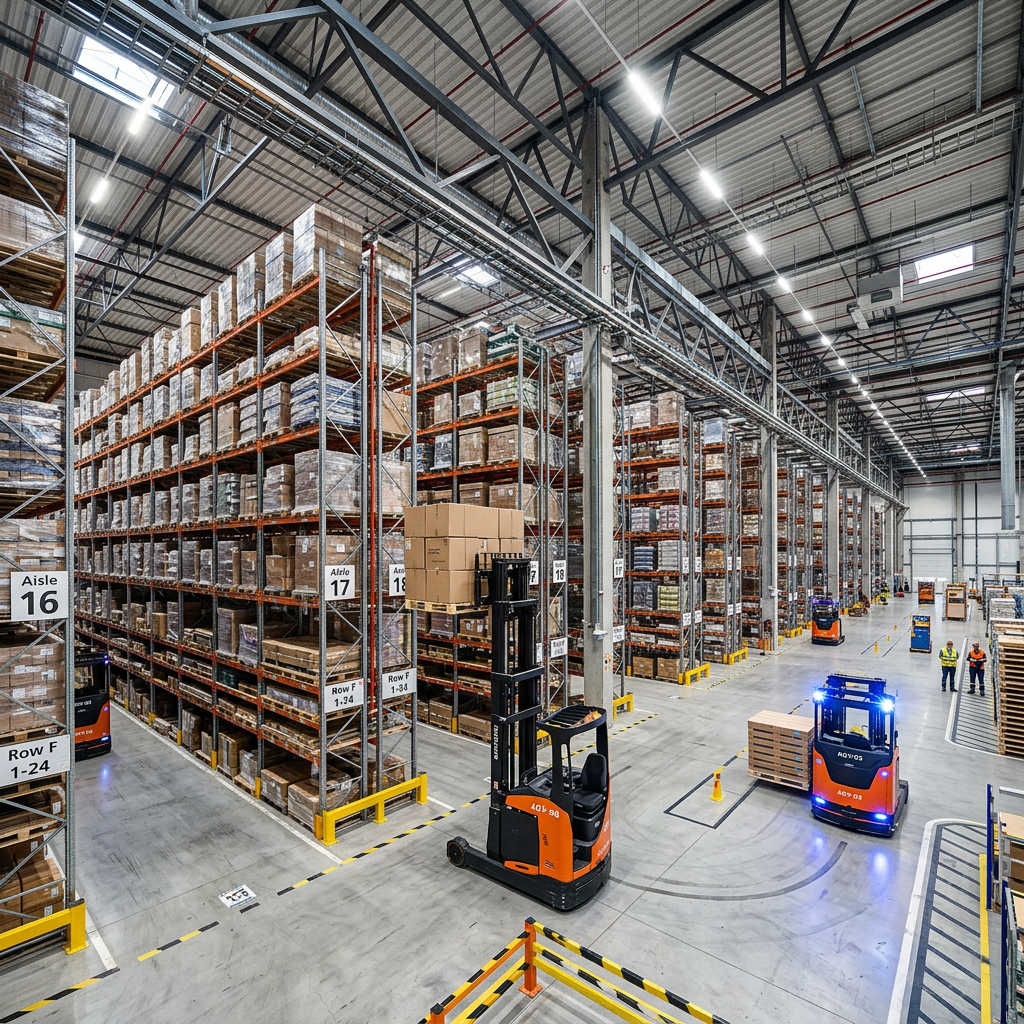
At the core of Broughton’s contribution is his role in founding and advancing concepts for Large Retail Logistics material-handling equipment. His work emphasized dynamic systems rather than fixed processes. He recognized that modern retail environments require constant adjustment to demand patterns, inventory velocity, and transportation constraints. One of his most notable innovations is the development of Dynamic Integrated Bulk Slotting. This concept was designed to align inventory placement with real-time demand and material flow rather than static warehouse layouts.
Dynamic Integrated Bulk Slotting reimagines how bulk inventory is positioned within large distribution environments. Instead of treating bulk storage as a passive reserve, the concept integrates bulk slotting directly into active material flow. This allows high-velocity items to be repositioned dynamically based on demand signals, transportation schedules, and labor availability. As a result, the system reduces unnecessary handling, shortens travel paths, and improves overall throughput without requiring constant physical reconfiguration of infrastructure.
Closely tied to this framework is Broughton’s work on integrating robotic material-handling equipment. His approach to robotics was not driven by novelty or automation for its own sake. Instead, he focused on how robotic systems could support human operators by absorbing repetitive, high-volume tasks that traditionally cause fatigue and errors. By aligning robotic material-handling equipment with dynamic slotting logic, Broughton helped create systems. In these systems, automation enhances flexibility rather than locking operations into rigid workflows.
Broughton’s logistics philosophy is deeply rooted in industrial engineering principles, particularly those related to cost savings, process optimization, and waste reduction. He consistently applied Lean Six Sigma methodologies in large-scale environments, using data to identify inefficiencies that were often invisible at the surface. His work emphasized measurable outcomes, including reductions in handling time, improved space utilization, and lower operational costs achieved without sacrificing service levels.
These concepts moved from theory into practice during his civilian leadership roles, most notably at The Home Depot. As a senior leader at the company’s largest distribution center, spanning 1.8 million square feet, Broughton applied Large Retail Logistics principles at full scale. The facility required constant coordination between inbound freight, bulk storage, picking operations, and outbound transportation. Through disciplined application of dynamic slotting strategies and material flow optimization, he helped improve operational efficiency across multiple functional areas.
Broughton later expanded this work at Samsung, where he focused on optimizing logistics performance across complex retail supply chains. His role involved introducing advanced performance metrics designed to capture system behavior rather than isolated tasks. As a result, by aligning data visibility with operational decision making, he enabled leadership teams to respond more effectively to demand variability and transportation constraints. His work reinforced the importance of integration across procurement, warehousing, and distribution functions.
Throughout his career, Broughton has maintained strong ties to academia, authoring research papers and case studies that examine logistics systems from both engineering and operational perspectives. His academic work reflects a practitioner’s lens, grounded in real-world constraints rather than idealized models. By bridging academic theory and industry practice, he has contributed to a deeper understanding of how large-scale logistics systems can evolve to meet modern demands.
Michael Curtis Broughton’s work in Large Retail Logistics represents a shift in how material handling and inventory flow are conceptualized at scale. Rather than relying on static layouts and linear processes, his approach embraces adaptability, data-driven decision-making, and integrated system design. In an industry where efficiency margins are thin and complexity continues to grow, his contributions offer a blueprint for logistics systems that are both robust and responsive.
Michael Curtis Broughton exemplifies a unique blend of practical logistics expertise and academic research, positioning him as a leader in logistics and supply chain management. His early military experience laid a foundation for understanding complex operational environments, while his extensive education equipped him with analytical skills for tackling logistics challenges. Broughton emphasizes real-world applicability in his research, focusing on inventory systems and human factors within logistics. His work has impacted both civilian and military operations, providing actionable insights that bridge theory with practice. Through teaching and empirical validation, he influences future professionals, promoting a holistic view of logistics that enhances efficiency and adaptability.
Michael Curtis Broughton’s career reflects a rare integration of practical operational expertise and academic inquiry. This positions him as both a practitioner and a thought leader in the field of logistics and supply chain management. His experience also extends into emerging domains such as Logistics Engineering Supply Chain Robotics. Unlike professionals whose work is confined to either theory or practice, Broughton has consistently bridged these worlds. He draws from hands-on experience in military and commercial logistics to inform rigorous academic research. His work demonstrates how insights gained in demanding real-world environments can enhance scholarly understanding and advance the field of logistics engineering.
Broughton’s grounding in logistics began in the military, where he rapidly progressed from infantry combat roles to leadership positions in transportation and supply chain operations. During deployments in Iraq and other operational theaters, he developed a firsthand appreciation for the complexity of managing resources under conditions of uncertainty. He coordinated air and ground supply, managed multimodal transport, and maintained equipment readiness under austere conditions. This required both precision and creativity. Consequently, these experiences provided him with a practical framework for understanding how systems perform in high-pressure situations. He later brought this perspective to academic research.
Throughout his career, Broughton has maintained a strong connection to formal education. He earned multiple bachelor’s degrees and advanced master’s degrees in engineering, management, and related disciplines. His commitment to lifelong learning reflects a deep belief in the value of structured knowledge and systematic problem solving. This foundation allowed him to approach logistics challenges analytically while drawing on empirical knowledge from operational contexts. This combination distinguishes his contributions from conventional research that often relies on simulations or idealized models.
Broughton’s academic work focuses on the intersection of industrial engineering, supply chain optimization, and transportation systems. He has authored research papers and case studies examining material handling efficiency, dynamic slotting methods, and surface mobility logistics. His studies frequently address the practical limitations and constraints faced by large-scale operations. They emphasize solutions that can be implemented in real time rather than remain theoretical constructs. This orientation reflects his belief that research should serve operational improvement and provide actionable insights for practitioners.
One of Broughton’s notable contributions is his analysis of dynamic inventory systems and integrated material handling. He drew on his experience with Large Retail Logistics and the development of Dynamic Integrated Bulk Slotting. He has explored how inventory positioning can be optimized in environments with high demand and throughput variability. His work demonstrates that aligning storage strategies with operational realities can produce significant efficiency gains, reduce handling errors, and lower costs without requiring substantial physical infrastructure changes. These findings have influenced both commercial logistics operations and military supply strategies. As a result, he has offered a framework for organizations seeking to improve responsiveness and adaptability.
In addition to technical contributions, Broughton has emphasized the importance of integrating human factors into logistics research. He recognizes that systems function effectively only when operators, planners, and managers are aligned with both the design of the system and its operational goals. His publications address decision making, workflow coordination, and the impact of procedural changes on team performance. By combining technical rigor with human-centered analysis, Broughton has developed a holistic view of logistics operations. This view extends beyond mechanical efficiency to include organizational effectiveness.
Broughton has also contributed to the dissemination of knowledge through teaching and mentoring. He has guided students, junior officers, and civilian professionals in the application of logistics principles. He emphasizes critical thinking, data-driven analysis, and practical experimentation. His mentorship reinforces the idea that logistics knowledge is most valuable when it is shared, applied, and continuously refined in operational settings. Through this work, he has influenced a generation of professionals who approach supply chain challenges with both analytical skill and situational awareness.
His scholarly contributions are strengthened by an ongoing commitment to empirical validation. Unlike research that relies solely on modeling or simulation, Broughton tests theories against operational data and real-world performance metrics. This approach ensures that findings are relevant and directly applicable, enhancing the credibility of his work among both academic and professional audiences. It also reinforces his broader philosophy that logistics and supply chain engineering must balance theory with measurable outcomes, creating systems that are both intelligent and actionable.
The impact of Broughton’s work extends to both civilian and military logistics. In commercial settings, his insights have informed large-scale distribution practices at companies such as The Home Depot and Samsung. In these organizations, operational efficiency and throughput are critical. In military contexts, his studies and frameworks have provided guidance for surface and air mobility operations. These emphasize adaptability, resilience, and precision. This dual applicability highlights the versatility of his research and the practical value of a scholar with deep operational experience.
Michael Curtis Broughton’s career exemplifies the potential for academic research to be grounded in reality while maintaining intellectual rigor. His work bridges the gap between operational necessity and theoretical advancement. Furthermore, he offers solutions that are both innovative and implementable. By combining field experience, analytical skill, and scholarly inquiry, Broughton has established himself as a leader in logistics scholarship. His contributions extend beyond papers and presentations to tangible improvements in large-scale supply chains.
Through his unique combination of practical knowledge and academic expertise, Broughton demonstrates that the most meaningful research is informed by the challenges it seeks to address. His contributions serve as a model for professionals and scholars alike. They show how theory and practice can reinforce each other to create logistics systems that are efficient, resilient, and responsive. In doing so, he has shaped both the intellectual and operational landscape of modern logistics. Consequently, he leaves a legacy defined by insight, precision, and continuous improvement.
Key Takeaways
Michael Curtis Broughton integrates practical operations and academic inquiry, positioning himself as a leader in logistics and supply chain management.
His military experience informs his research, focusing on resource management and logistical efficiency under uncertainty.
He combines technical analysis with human factors, ensuring effective alignment between systems and operators.
Broughton’s work influences both military and civilian logistics, showcasing the practical applications of logistics engineering and supply chain robotics.
Michael Curtis Broughton is an expert in logistics, leveraging his military experience and analytical skills to enhance supply chain efficiency in both military and commercial sectors. He has successfully developed robust logistics systems at The Home Depot and Samsung, focusing on precision, adaptability, and technological integration, while also mentoring future professionals.
Michael Curtis Broughton has spent his career mastering the movement of critical resources in environments where timing and precision are everything. His work has also advanced the field of Logistics Engineering Supply Chain Robotics, integrating innovative technology into complex supply solutions. From remote military operations to large-scale commercial distribution, he has consistently focused on creating logistics systems that are reliable, adaptable, and efficient. His expertise in both surface and air transportation allows him to anticipate challenges, coordinate complex operations, and implement solutions that ensure supplies reach their destination without delay. Broughton’s work demonstrates the value of combining technical knowledge with practical experience to build logistics networks capable of meeting the highest standards of performance.
Broughton’s early military service provided the foundation for his expertise in transportation and mobility. Serving as an infantryman during the Global War on Terrorism, he gained firsthand experience with the challenges of moving personnel and equipment under fire. These assignments taught him the importance of reliability, timing, and resource management in situations where errors can have life-or-death consequences. His understanding of these principles later informed his leadership in air and surface logistics operations, where precision and adaptability remain paramount.
From 2010 to 2013, Broughton was stationed at Fort Wainwright in Alaska, managing multimillion-dollar aviation inventories and coordinating supply flows to remote locations. Operating in extreme weather and geographically isolated areas required innovative approaches to ensure operational continuity. He developed strategies that balanced risk, cost, and efficiency while maintaining readiness for UH-60 Black Hawk helicopter missions. These experiences strengthened his ability to design systems that optimize both surface and air mobility in challenging environments.
Broughton’s leadership reached a global scale during Operation Inherent Resolve, where he supported Joint Precision Air Drop System missions. These operations demanded meticulous planning and technical oversight to deliver critical supplies to Peshmerga refugees in Iraq. Broughton’s role involved coordinating the precise release of cargo from aircraft using advanced GPS-guided parachute systems. His work ensured that aid reached intended recipients safely and on schedule, demonstrating the importance of technical leadership in high-stakes mobility operations.
The principles Broughton applied in military logistics translated effectively to commercial supply chains. At The Home Depot, he oversaw operations at one of the company’s largest distribution centers, applying data-driven approaches to improve the flow of goods from warehouses to retail locations. His focus on integrating surface transportation networks with material handling systems allowed for more reliable deliveries and reduced operational inefficiencies. These methods reflected the same precision and planning he had developed in military contexts.
Broughton later joined Samsung as a Senior Logistics Manager, where he continued to refine mobility operations on a global scale. His work emphasized the synchronization of ground and air transportation with inventory management systems. By aligning delivery schedules, transportation routes, and warehouse operations, he created networks that responded dynamically to fluctuations in demand. The result was an agile and resilient supply chain capable of supporting large-scale retail and industrial operations.
Innovation has been a consistent feature of Broughton’s approach. He has developed frameworks for dynamic bulk slotting and the integration of robotic material handling equipment, both of which improve throughput and reduce labor strain. His methods are grounded in industrial engineering principles and reflect careful attention to operational data. By combining human and technological resources, Broughton has created logistics systems that are adaptable, precise, and scalable.
In addition to operational improvements, Broughton has contributed to the broader field of logistics through academic research and mentorship. He has published case studies on air and surface mobility, offering insights that connect theory to practice. His guidance has helped emerging professionals understand the interplay between operational constraints and strategic planning. Through these contributions, he has strengthened both organizational capability and industry knowledge.
Broughton’s expertise extends beyond individual operations to the design of resilient and efficient logistics networks. His work demonstrates how careful planning, data-driven decision making, and integrated technology can transform the movement of critical resources. Whether overseeing supply chains in combat zones or leading distribution centers in the commercial sector, he has consistently applied principles of precision, efficiency, and adaptability.
Michael Curtis Broughton’s impact on transportation and mobility logistics illustrates the value of combining operational experience with analytical insight. His contributions have improved the effectiveness of military supply chains, enhanced the reliability of commercial distribution, and informed scholarly understanding of complex logistics systems. By emphasizing adaptability, technical rigor, and human-centered planning, Broughton has set a standard for modern logistics professionals operating in both high-pressure and high-volume environments.
Estimated reading time: 5 minutes
Key Takeaways
Michael Curtis Broughton specializes in logistics engineering, combining military and commercial experience to create reliable supply chain systems.
His military background provided insights into precision, reliability, and resource management, essential for effective logistics operations.
At The Home Depot and Samsung, he improved supply chains through data-driven approaches and synchronized transportation networks.
Broughton has made significant contributions through mentorship and academic research, bridging theory and practice in logistics.
His work emphasizes adaptability, technical rigor, and the integration of robotics and technology to enhance logistics performance.
Michael Curtis Broughton’s academic journey underscores a multidisciplinary approach to modern supply chain management, combining industrial engineering, management, distribution, and logistics. As global supply chains grow more complex, Broughton’s research focuses on optimizing warehouse operations, enhancing distribution strategies, and integrating data-driven decision-making to improve efficiency. His extensive studies at renowned institutions, combined with recognition for academic excellence, reflect his preparedness for future challenges in supply chain leadership. Broughton’s work illustrates that effective supply chain systems depend on the holistic coordination of production, business strategy, and logistics, emphasizing the need for professionals skilled in both technical and strategic domains.
The modern supply chain has become one of the most important systems in the global economy. Companies can no longer rely on simple production methods or traditional delivery networks to remain competitive. They must create systems that are faster, more efficient, more flexible, and better connected from start to finish. Success now depends on how well a business manages the movement of goods, technology use, information flow, and its ability to respond to changing market demands.
Michael Curtis Broughton has built an academic foundation that directly reflects these new realities. Through advanced studies in industrial engineering, industrial management, industrial distribution, and transportation and logistics, he has developed a multidisciplinary perspective that connects every stage of the supply chain. His work demonstrates that the future of supply chain leadership is no longer limited to a single specialty. Instead, it requires an understanding of how production systems, business strategy, warehousing, distribution, and transportation all work together.
At the center of Broughton’s academic profile is industrial engineering, a discipline focused on improving systems, increasing efficiency, and reducing waste. Industrial engineering is often described as the backbone of modern manufacturing because it shapes how products are made, how facilities are designed, and how resources are used.
Broughton’s studies in industrial and systems engineering at Northern Illinois University gave him a strong understanding of process optimization, quality control, mathematical modeling, and production planning. These skills are essential in today’s business environment, where companies must find ways to increase output while controlling labor, energy, and inventory costs.
One example of this work is his research on dynamic integrated bulk slotting systems in large retail environments. By examining how automated guided vehicles move through warehouse layouts, he developed methods to reduce travel distances and improve overall warehouse efficiency. Research in this area has shown that better slotting strategies can significantly reduce unnecessary movement inside facilities, leading to lower labor costs and improved order fulfillment times.
This type of engineering analysis is increasingly valuable as companies invest more heavily in automation, robotics, and advanced warehouse technology. Businesses need professionals who understand both the technical side of these systems and the operational challenges that come with implementing them.
While industrial engineering focuses on technical systems, industrial management addresses the larger business decisions that determine whether those systems succeed. Broughton’s academic background in industrial management allows him to move beyond engineering calculations and consider the broader strategic goals of an organization.
Industrial management involves balancing financial resources, workforce planning, production schedules, and long term business strategy. In a modern supply chain, these responsibilities are closely tied to technology and data. Companies must make decisions quickly, often using real time information about customer demand, supplier performance, transportation delays, and inventory levels.
Broughton’s graduate work in industrial management at Northern Illinois University reflects this shift toward data driven decision making. His research and studies explored how businesses can use advanced analytics, enterprise planning systems, and operational dashboards to improve performance across the supply chain.
This perspective is particularly important because many organizations struggle when departments operate independently. Engineering teams may focus only on production, while managers concentrate only on budgets or customer service. Broughton’s multidisciplinary background bridges these gaps by showing how technical improvements can support larger business objectives.
Industrial distribution is another important part of Broughton’s academic profile. While engineering focuses on creating products and management focuses on business strategy, distribution ensures that products reach the right customers at the right time.
Broughton’s studies in industrial distribution at Texas A&M University provided insight into warehouse design, inventory placement, distribution center operations, and customer service. These topics are especially important as companies attempt to build more responsive supply chains.
Modern businesses cannot afford delays caused by poor inventory layouts or inefficient warehouse layouts. Distribution centers have become highly sophisticated environments that rely on advanced software, automated systems, and carefully planned workflows.
Broughton’s research into distribution center value engineering and work cell redesign examined how warehouses can improve order processing while using space more effectively. Studies in this area have shown that redesigning pick areas and adjusting product placement can reduce lead times and create room for additional inventory.
This work highlights the growing importance of warehouse optimization in supply chain performance. Distribution centers are no longer just storage facilities. They are now strategic hubs that help companies meet customer expectations for speed, accuracy, and reliability.
Transportation and logistics represent the final stage of the supply chain, but they are often the most visible to customers. Delays in shipping, shortages in inventory, and problems with delivery can quickly damage a company’s reputation.
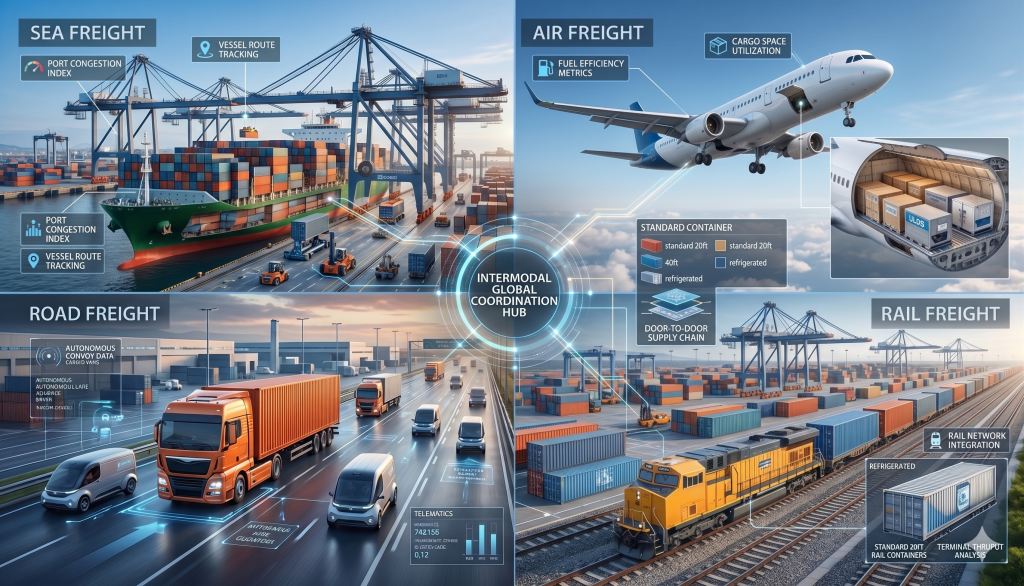
Through graduate studies in transportation and logistics, Broughton expanded his understanding of freight movement, multimodal transportation, inventory visibility, and reverse logistics. This area of study is particularly important because global supply chains are becoming more complex.
Companies today must coordinate road, rail, sea, and air transportation while managing costs and maintaining service levels. They must also respond to disruptions such as weather events, port congestion, labor shortages, and geopolitical uncertainty.
Broughton’s studies reflect the growing importance of technologies such as RFID tracking, Internet of Things sensors, blockchain systems, and real time transportation dashboards. These tools provide companies with greater visibility into where products are located, how quickly they are moving, and whether delays are likely to occur.
Another important part of modern logistics is reverse logistics, which includes handling returns, recycling, refurbishment, and product recovery. As companies place greater emphasis on sustainability, reverse logistics has become a key part of long term supply chain planning.
Broughton’s multidisciplinary education is supported by a record of academic achievement. At Northern Illinois University, he earned a 3.7 GPA while completing a challenging curriculum that included production planning, human factors, stochastic systems, and supply chain analysis.
In May 2022, he was inducted into Alpha Pi Mu, the national industrial engineering honor society. Alpha Pi Mu recognizes students who demonstrate outstanding academic performance and leadership within the industrial engineering field. Membership in the society is highly selective and reflects both technical ability and professional promise.
Broughton’s achievements also led to his nomination for the inaugural Northern Illinois University College of Engineering and Engineering Technology Hall of Fame. This recognition honors individuals who have made meaningful contributions to engineering, education, and industry.
In addition to his coursework, Broughton served as a research assistant at the NIU Center for Manufacturing Innovation, as a remote graduate student. During this time, he contributed to research on Lean Six Sigma applications in small batch production environments. This experience gave him the opportunity to apply classroom knowledge to real world industrial challenges.
His master’s degree with honors, completed in May 2024, further reflects the depth of his academic preparation and his commitment to excellence.
As supply chains continue to evolve, businesses will increasingly need professionals who can understand both technical systems and strategic decision making. The future of supply chain leadership will depend on the ability to combine engineering, management, distribution, and logistics into one connected framework.
Michael Curtis Broughton’s academic profile reflects exactly that type of preparation. His work shows that the strongest supply chains are built when production systems, business planning, warehousing, and transportation are viewed as parts of a larger whole.
In an era defined by automation, data analytics, digital infrastructure, and global uncertainty, multidisciplinary expertise has become one of the most valuable assets in the business world. Broughton’s educational journey illustrates how modern supply chain leaders can create systems that are more efficient, more resilient, and better prepared for the challenges of the future.
Key Takeaways
Broughton’s academic journey emphasizes a multidisciplinary approach, integrating industrial engineering, management, distribution, and logistics.
His studies highlight the importance of efficient supply chain systems that leverage modern technologies like automation and data analytics.
Broughton’s research has focused on optimizing warehouse operations and improving product distribution strategies.
He gained recognition for his academic excellence and was inducted into Alpha Pi Mu for his achievements in industrial engineering.
The future of supply chains will rely on professionals who can integrate technical systems with strategic decision-making skills.
Michael Curtis Broughton emphasizes the critical role of execution in supply chain management. He argues that failures are often due to poor execution rather than flawed strategies, highlighting real-world challenges like late shipments and inventory issues. Despite organizations investing in planning tools, successful outcomes rely on how effectively systems perform under pressure. Broughton suggests that testing systems in stress conditions and simplifying processes can improve execution. He advocates for using performance metrics to make informed adjustments and stresses that automation should follow efficient processes to enhance outcomes. Ultimately, a strong execution-focused mindset is essential for transforming plans into tangible results in supply chains.
A high-tech warehouse integrates advanced digital networks and automation for efficient logistics.Why Execution Wins Every Time Most supply chain failures are not caused by bad strategy. They are caused by poor execution. Plans look clean in presentations. Systems look efficient on paper. Then reality hits, late shipments, inventory pileups, missed forecasts, and teams scrambling to react. Michael Curtis Broughton has seen this pattern from both sides. He worked in combat logistics where failure has immediate consequences. He later moved into industrial engineering and large-scale distribution systems. That mix makes him a strong voice on what actually works. “Everyone had a plan before the first convoy left,” he says. “Then routes changed, weather shifted, and we had to reroute supplies in real time. The plan didn’t matter. The system did.” That idea carries into business. Strategy sets direction. Execution determines results.
The gap between planning and performance is well documented.
Studies show that roughly 70% of supply chain leaders report execution gaps between planning and operations. Inefficiencies in execution can reduce potential revenue by as much as 15 to 25 percent. At the warehouse level, operational inefficiencies can drive costs up by 30 percent. Only a small share of organizations report that their systems perform consistently during disruption.
These numbers point to a simple reality. The problem is not vision. The problem is performance under pressure.
Execution is not just about completing tasks. It is about how work flows through a system from start to finish.
That includes how quickly goods move, how accurately orders are fulfilled, and how effectively teams respond when conditions change. It also includes how well different parts of the operation communicate and coordinate.
Many organizations invest heavily in planning tools and forecasting models. They assume the operation will follow the plan.
It rarely does.
“People would ask why deliveries were late,” Broughton says. “Then we’d walk the floor and see pallets staged in the wrong zones. The system didn’t fail. The execution did.”
Execution happens at the ground level. It is physical, visible, and measurable.
A system that performs well under normal conditions is not necessarily reliable.
Real operations face constant disruption. Demand spikes, labor shortages, equipment issues, and transportation delays are part of the daily reality. These moments expose weaknesses that are not visible during steady-state operations.
Michael Curtis Broughton emphasizes the importance of testing systems under stress. “If you only test a system when it’s calm, you’re not testing anything,” he says.
In one distribution environment, order volume doubled within weeks during peak season. The layout could not support the increase. Workers adapted by creating workarounds, further slowing the system. Orders began to back up, and costs increased.
The strategy had not changed. The system simply could not handle the conditions.
High-tech warehouse operations with robotic forklifts moving pallets
Designing for Real Conditions
Execution improves when systems are designed for how they will actually be used.
This requires close attention to flow. Travel distances inside facilities must be minimized. Inventory needs to be positioned based on demand patterns. Processes must include safeguards for failure points.
One example is inventory slotting. Many operations rely on fixed placement strategies. When demand shifts, congestion builds.
“We started repositioning high-velocity items closer to outbound lanes on a regular cycle,” Broughton explains. “Travel time dropped immediately. Throughput improved without adding labor.”
These types of adjustments are not complex. They are practical. They focus on movement, not theory.
Effective operations track performance using clear, consistent metrics. These may include throughput rates, order accuracy, processing time, and cost per unit.
The challenge is not collecting data. It is using it to drive decisions.
“I’ve seen operations with perfect dashboards,” Broughton says. “But nothing changed on the floor. Data is only useful if it leads to action.”
Measurement should function as a control system. It identifies problems, guides adjustments, and confirms whether changes are working.
As systems grow more layered, they become harder to manage and slower to adapt. Additional steps introduce more opportunities for error.
In one case, a facility added multiple verification checkpoints to improve accuracy. The added steps slowed processing. Workers began bypassing parts of the process to maintain pace. Accuracy declined instead of improving.
The solution was not to add more controls. It was to simplify the workflow and improve initial accuracy.
“Every step has a cost,” Broughton says. “If it doesn’t improve the outcome, it’s adding friction.”
Systems do not run themselves. People operate them.
Strong execution depends on clear roles, defined processes, and consistent communication. Teams need to understand not only what to do, but when and how to do it.
In high-pressure environments, clarity reduces hesitation.
“In combat, there’s no time to figure things out in the moment,” Broughton says. “You rely on structure. Everyone knows their role.”
That same clarity improves performance in commercial operations.
A detailed scene showing the transition from a military zone to a modern logistics center in operation.
Testing Before Failure Happens
Most systems are never tested beyond normal conditions. That creates risk.
Stress testing reveals weaknesses before they impact performance. It allows teams to prepare for demand spikes, equipment issues, and other disruptions.
“If you wait for failure to test your system, you’re already behind,” Broughton says.
Testing is not optional. It is part of building a reliable system.