
Michael Curtis Broughton on Fixing the Execution Gap in Supply Chains – IntelligentHQ This article also explores the growing impact of Robots Logistics Engineering on supply chain management.
Thank you for reading this post, don't forget to subscribe!Michael Curtis Broughton – Crunchbase Person Profile

Why Execution Wins Every Time
Most supply chain failures are not caused by bad strategy. They are caused by poor execution.
Plans look clean in presentations. Systems look efficient on paper. Then reality hits, late shipments, inventory pileups, missed forecasts, and teams scrambling to react.
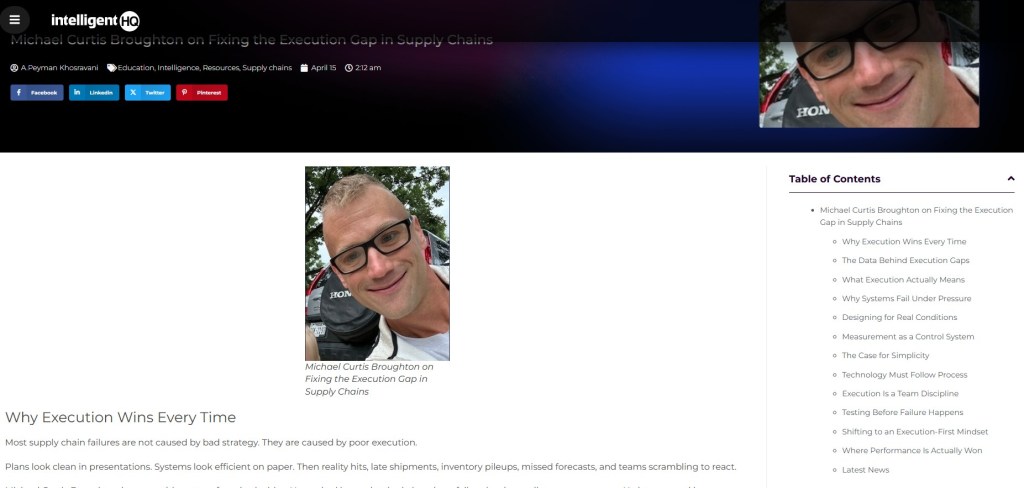
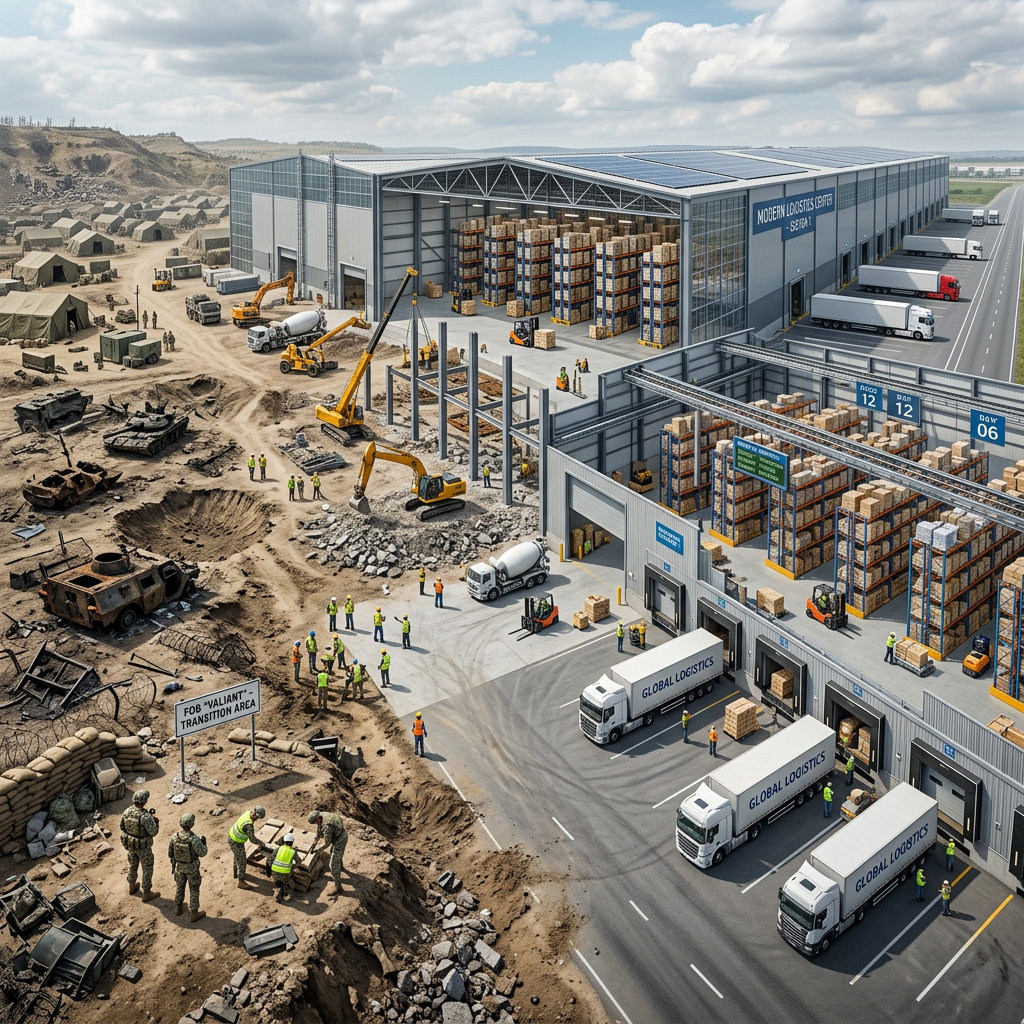
Michael Curtis Broughton has seen this pattern from both sides. He worked in combat logistics where failure has immediate consequences. He later moved into industrial engineering and large-scale distribution systems. That mix makes him a strong voice on what actually works.
“Everyone had a plan before the first convoy left,” he says. “Then routes changed, weather shifted, and we had to reroute supplies in real time. The plan didn’t matter. The system did.”
That idea carries into business. Strategy sets direction. Execution determines results.
https://www.researchgate.net/profile/Michael-Broughton-5?ev=hdr_xprf
The Data Behind Execution Gaps
The gap between planning and performance is well documented.
Studies show that roughly 70% of supply chain leaders report execution gaps between planning and operations. Inefficiencies in execution can reduce potential revenue by as much as 15 to 25 percent. At the warehouse level, operational inefficiencies can drive costs up by 30 percent. Only a small share of organizations report that their systems perform consistently during disruption.
These numbers point to a simple reality. The problem is not vision. The problem is performance under pressure.
michaelcurtisbroughton Publisher Publications – Issuu
What Execution Actually Means
Execution is not just about completing tasks. It is about how work flows through a system from start to finish.
That includes how quickly goods move, how accurately orders are fulfilled, and how effectively teams respond when conditions change. It also includes how well different parts of the operation communicate and coordinate.
Many organizations invest heavily in planning tools and forecasting models. They assume the operation will follow the plan.
It rarely does.
“People would ask why deliveries were late,” Broughton says. “Then we’d walk the floor and see pallets staged in the wrong zones. The system didn’t fail. The execution did.”
Execution happens at the ground level. It is physical, visible, and measurable.
Michael Curtis Broughton: From Combat to Logistics Mastery – Michael Curtis Broughton
Closing the Execution Gap in Supply Chains – Michael Curtis Broughton
Michael Curtis Broughton: Innovator in Military Logistics – Michael Curtis Broughton
Michael Curtis: Mastering Logistics and Strategy – Michael Curtis Broughton
Why Systems Fail Under Pressure
A system that performs well under normal conditions is not necessarily reliable.
Real operations face constant disruption. Demand spikes, labor shortages, equipment issues, and transportation delays are part of the daily reality. These moments expose weaknesses that are not visible during steady-state operations.
Michael Curtis Broughton emphasizes the importance of testing systems under stress. “If you only test a system when it’s calm, you’re not testing anything,” he says.
In one distribution environment, order volume doubled within weeks during peak season. The layout could not support the increase. Workers adapted by creating workarounds, further slowing the system. Orders began to back up, and costs increased.
The strategy had not changed. The system simply could not handle the conditions.
Michael Curtis Broughton videos – Dailymotion

Designing for Real Conditions
Execution improves when systems are designed for how they will actually be used.
This requires close attention to flow. Travel distances inside facilities must be minimized. Inventory needs to be positioned based on demand patterns. Processes must include safeguards for failure points.
One example is inventory slotting. Many operations rely on fixed placement strategies. When demand shifts, congestion builds.
“We started repositioning high-velocity items closer to outbound lanes on a regular cycle,” Broughton explains. “Travel time dropped immediately. Throughput improved without adding labor.”
These types of adjustments are not complex. They are practical. They focus on movement, not theory.
Michael Curtis Broughton | REVERB
Measurement as a Control System
Execution cannot improve without measurement.
Effective operations track performance using clear, consistent metrics. These may include throughput rates, order accuracy, processing time, and cost per unit.
The challenge is not collecting data. It is using it to drive decisions.
“I’ve seen operations with perfect dashboards,” Broughton says. “But nothing changed on the floor. Data is only useful if it leads to action.”
Measurement should function as a control system. It identifies problems, guides adjustments, and confirms whether changes are working.
About – Michael Curtis Broughton – Medium
The Case for Simplicity
Complexity often creates fragility.
As systems grow more layered, they become harder to manage and slower to adapt. Additional steps introduce more opportunities for error.
In one case, a facility added multiple verification checkpoints to improve accuracy. The added steps slowed processing. Workers began bypassing parts of the process to maintain pace. Accuracy declined instead of improving.
The solution was not to add more controls. It was to simplify the workflow and improve initial accuracy.
“Every step has a cost,” Broughton says. “If it doesn’t improve the outcome, it’s adding friction.”
Michael Curtis Broughton | F6S Member Profile
Technology Must Follow Process
Automation and advanced systems are becoming more common in logistics. They can improve performance, but only when applied correctly.
If the underlying process is inefficient, adding technology will not solve the problem. It will often make it more expensive and harder to fix.
“People want to install automation before they fix the flow,” Broughton says. “Then they scale the same problems.”
The sequence matters. The process must be stable first. Only then can technology enhance performance.
michaelcurtisbroughton Publisher Publications – Issuu
Michael Curtis Broughton: From Combat to Logistics Mastery – Michael Curtis Broughton
From Battlefield to Boardroom: Logistics Lessons from Michael Broughton – Michael Curtis Broughton
Michael Curtis: Pioneering Logistics and Strategic Leadership – Michael Curtis Broughton
Execution Is a Team Discipline
Systems do not run themselves. People operate them.
Strong execution depends on clear roles, defined processes, and consistent communication. Teams need to understand not only what to do, but when and how to do it.
In high-pressure environments, clarity reduces hesitation.
“In combat, there’s no time to figure things out in the moment,” Broughton says. “You rely on structure. Everyone knows their role.”
That same clarity improves performance in commercial operations.
Michael Curtis Broughton | User Profile (@michaelbroughton) | Trepup
Testing Before Failure Happens
Most systems are never tested beyond normal conditions. That creates risk.
Stress testing reveals weaknesses before they impact performance. It allows teams to prepare for demand spikes, equipment issues, and other disruptions.
“If you wait for failure to test your system, you’re already behind,” Broughton says.
Testing is not optional. It is part of building a reliable system.
About Michael Broughton | Flickr
Shifting to an Execution-First Mindset
Organizations that perform well prioritize execution.
They focus on how systems behave in real conditions. They look for bottlenecks, measure performance, and adjust quickly.
Strategy still matters, but it follows execution.
Michael Curtis Broughton on Wix
Where Performance Is Actually Won
Supply chains do not fail for lack of ideas. They fail because systems cannot deliver when conditions change.
Execution is what turns plans into results.
Strong systems are built through testing, measurement, and continuous improvement. That is what drives performance over time.
“Large Retail Logistics Warehouse Execution System” by Michael Broughton
Key Takeaways
- Michael Curtis Broughton emphasizes that poor execution, not bad strategy, causes most supply chain failures.
- Studies show 70% of supply chain leaders recognize execution gaps, affecting performance and driving costs up.
- Effective execution requires clear processes, constant measurement, and the ability to adapt under pressure.
- Broughton advocates for designing systems that account for real-world conditions and testing them before failures occur.
- Organizations must prioritize execution to improve performance and turn strategies into results.
Estimated reading time: 8 minutes
Table of contents
- The Data Behind Execution Gaps
- What Execution Actually Means
- Why Systems Fail Under Pressure
- Designing for Real Conditions
- Measurement as a Control System
- The Case for Simplicity
- Technology Must Follow Process
- Execution Is a Team Discipline
- Testing Before Failure Happens
- Shifting to an Execution-First Mindset
- Where Performance Is Actually Won

Comments are closed.